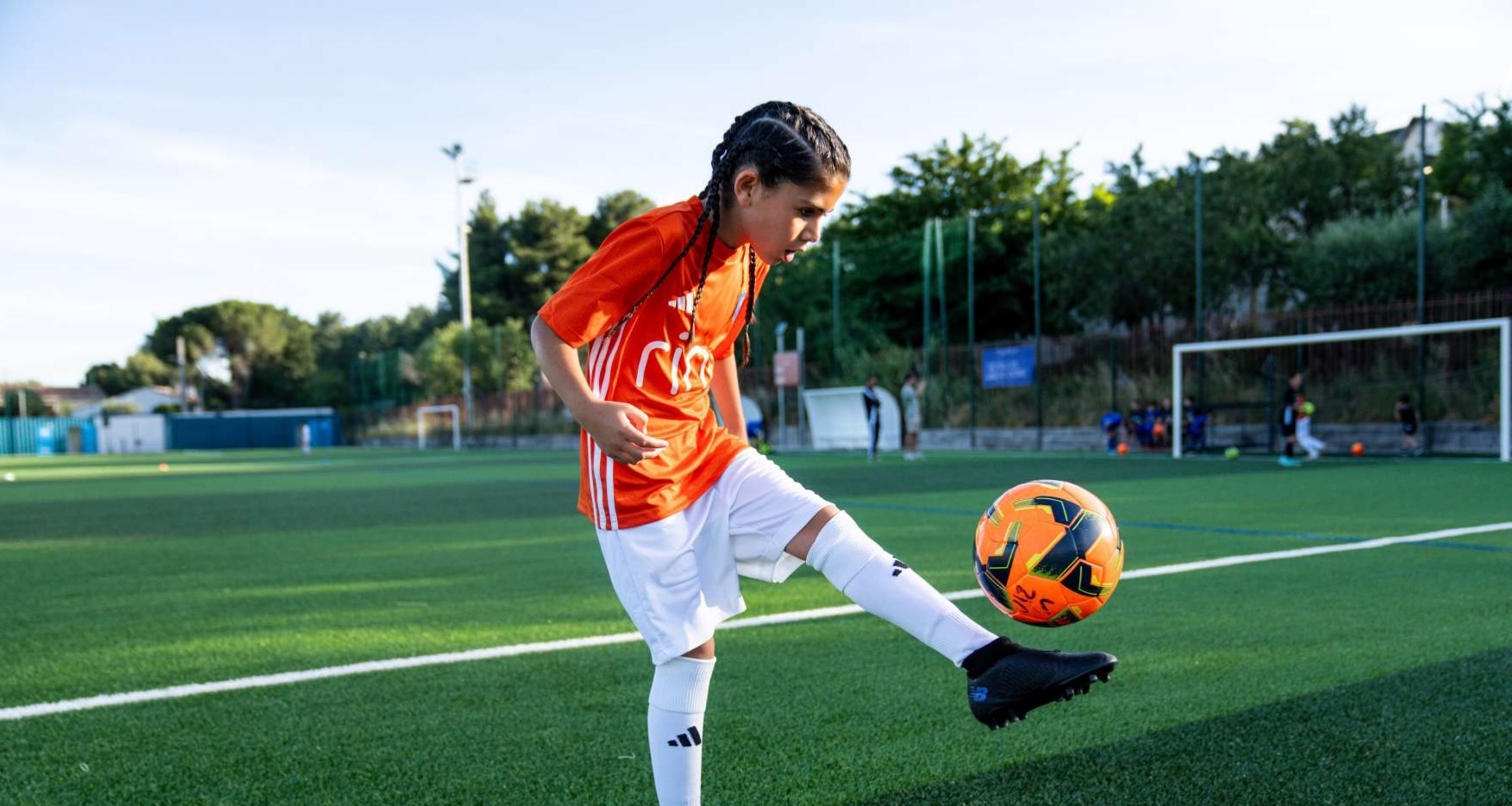
Amateur sports sponsorship is changing in scale: it is becoming more local, more measurable, and more committed. ROI, digital technology, women's sports, and concrete CSR are reshaping what has become a strategic lever. 2025 laid the foundations, and 2026 is accelerating the process.
Local sponsorship is much more than a small bonus given at the end of the year to make people happy. It has become an essential gateway for companies that really want to anchor their brand in the landscape of their target audience.
But beware, the method has changed. You no longer choose a club at random. In 2025, proximity is determined by the scalpel: you look for a club exactly where your customers and employees live.
Investing in the neighborhood club creates an immediate virtuous circle. The club is no longer just a sports association, it is a micro-media outlet—and a place with incredible values (including mutual aid, equality, education, etc.)—that speaks to a highly captive audience every day.
Guillaume Sarfati, our CEO, often says that for us, every club is an ecosystem. It's not just a logo on a jersey, but a real bridge between a brand and its local community. Capitalizing on this proximity transforms a marketing expense into a powerful lever for loyalty.
This is probably the most significant change. The sponsor of 2025 is no longer a silent patron, but an investor who expects a specific return on investment. The era of "support for the beauty of the gesture" is giving way to a culture of real and concrete commitment! Companies want to see the numbers: engagement rates, attendance, real visibility, and effectiveness (measurable impact on clubs, digital visibility, click-through rates, open rates, impressions, engagement).
The professionalization of the sector necessarily involves this step. To meet this requirement, we had to roll up our sleeves at act for sport and create tools capable of documenting this impact. As Guillaume Sarfati says, professionalization requires measurement. Every euro invested must be translated into concrete, actionable data. For companies, the message is clear: amateur sport is a marketing channel that covers digital, field, and social media, and it must be measurable, controllable, and profitable.
The small club that was content with a poster in the gym and a website dating back to the 2000s is now a thing of the past. Amateur clubs have become veritable content creation machines. From spectacular goals on short-form platforms such as Rematch.TV to behind-the-scenes glimpses of the locker room on Instagram, they have mastered the codes. We are witnessing the emergence of highly credible local micro-influencers, because they are authentic and passionate. Who are they? Volunteers, players, their entourages—all of them are connected on social media and perfectly comfortable with the codes.
For sponsors, this is a golden opportunity to co-create. Today's winning strategy is hybrid: it combines physical presence on the ground with the power of digital. Smart brands work hand in hand with clubs through act for sport to multiply the impact of the jersey on phone screens. Digital is no longer an add-on, it's the megaphone for your commitment on the ground.
Women's sports have become a social trend... So, if you haven't yet incorporated amateur women's sports into your strategy, now is the time to do so. This isn't just a passing trend or a niche market—it's a real boom. Memberships are skyrocketing, media coverage is increasing, and the image being projected is innovative, dynamic, and inclusive.
Supporting women's sports is not charity work. It is a major strategic opportunity to embody strong values without the need for grand marketing speeches. Guillaume Sarfati is adamant about this: not supporting women's sports today means missing out on a strategic and committed opportunity. It's a win-win situation that combines image performance with concrete social commitment. Given the many difficulties women face in accessing sport, partnering with them means partnering with strong, committed women who are making a difference.
We hear about CSR everywhere, but by 2025, it must be tangible, real, concrete, and provable. Sponsoring amateur sports is the ideal vehicle for turning promises into actions: inclusion of young people, a third place of education for our children, accessibility, local environmental initiatives. Sponsors no longer want just a label to make themselves look good; they want to tell the story of their real impact on the ground.
It's the Holy Grail of modern marketing: successfully combining commercial visibility with meaning. CSR in sponsorship isn't a bonus, it's a requirement. The proof is in the pudding: every activation becomes a story that can be told. In short, we're entering an era where social return on investment is boosting marketing performance.
Despite all this digitalization, the reality of sport remains on the field. Jerseys, billboards, textiles... these physical media remain essential visual anchors. They are the immediate and memorable point of contact for all spectators and players. Statistics flash: a simulation of 100 sponsored clubs, each playing 30 games per season x 24 players visible on the field with the sponsor's logo x 50 spectators per game = that's 3.6 million logos seen! Not bad, right?
However, requirements have changed here too. People want quality, traceability, and a polished look. Why? Because a beautiful photo of a jersey emblazoned with a logo on Instagram starts with a beautiful, clean jersey on the field. The physical and digital worlds are finally united. These "traditional" levers remain essential for ensuring long-term brand presence and establishing credibility.
When giants such as Uber Eats, Groupama, and Allianz enter the amateur arena, it's a sign that the market is ripe and that this approach is becoming more widespread—in other words, any company and/or brand can get involved. Major brands are now adopting a "glocal" strategy: they seek to generate volume and emotional engagement where it really matters, as close as possible to people's everyday lives.
This is excellent news for the entire ecosystem. It allows for the pooling of activations, co-sponsorship with SMEs, and the benefit of the marketing expertise of large corporations. Seeing major brands get involved at the local level shows that amateur sports have become a real strategic market, and not just a publicity stunt.
So, what can we expect for 2026? It won't be a sudden break, but rather an acceleration of everything we've just seen. Those who haven't moved risk finding themselves sidelined.
Local sports are now adopting the standards of the professional world: professional photos, detailed statistics, and engagement figures will be required across the board. Short digital content will continue to skyrocket, and activations will intrinsically link the field to the phone. As for women's sports and CSR, these will no longer be optional: not committing to them or pretending to do so will be seen as backward.
In summary, if you structure your sponsorship now, you will have a head start in 2026. As our CEO,Guillaume Sarfati, sums it up:
“By 2026, every euro invested in the field will have to be visible, measurable, and tell a story. The brands that have anticipated this trend by 2025 will be those that transform their partnerships into real business drivers and local engagement.”

What is the average budget for amateur sports sponsorship? It depends greatly on the clubs and the level of commitment. For local SMEs, it can vary from €1,000 to €50,000. For clubs that partner with national brands with large-scale operations, it can reach several hundred thousand euros.
How can you measure the ROI of local sponsorship? It can be measured through on-the-ground visibility (jerseys, billboards), digital engagement (social media, sponsored content), as well as attendance and direct interactions with the community. Today, simple tracking tools provide a clear picture of these benefits.
What are the key trends for 2026? The main points are local sponsorship, the demand for measurable ROI, the digitization of clubs, the rise of women's sports, concrete CSR, and the arrival of national brands on the local scene.
Book an appointment with Sissi and learn about the "Act for Sport" initiative.
Local sponsorship is much more than a small bonus given at the end of the year to make people happy. It has become an essential gateway for companies that really want to anchor their brand in the landscape of their target audience.
But beware, the method has changed. You no longer choose a club at random. In 2025, proximity is determined by the scalpel: you look for a club exactly where your customers and employees live.
Investing in the neighborhood club creates an immediate virtuous circle. The club is no longer just a sports association, it is a micro-media outlet—and a place with incredible values (including mutual aid, equality, education, etc.)—that speaks to a highly captive audience every day.
Guillaume Sarfati, our CEO, often says that for us, every club is an ecosystem. It's not just a logo on a jersey, but a real bridge between a brand and its local community. Capitalizing on this proximity transforms a marketing expense into a powerful lever for loyalty.
This is probably the most significant change. The sponsor of 2025 is no longer a silent patron, but an investor who expects a specific return on investment. The era of "support for the beauty of the gesture" is giving way to a culture of real and concrete commitment! Companies want to see the numbers: engagement rates, attendance, real visibility, and effectiveness (measurable impact on clubs, digital visibility, click-through rates, open rates, impressions, engagement).
The professionalization of the sector necessarily involves this step. To meet this requirement, we had to roll up our sleeves at act for sport and create tools capable of documenting this impact. As Guillaume Sarfati says, professionalization requires measurement. Every euro invested must be translated into concrete, actionable data. For companies, the message is clear: amateur sport is a marketing channel that covers digital, field, and social media, and it must be measurable, controllable, and profitable.
The small club that was content with a poster in the gym and a website dating back to the 2000s is now a thing of the past. Amateur clubs have become veritable content creation machines. From spectacular goals on short-form platforms such as Rematch.TV to behind-the-scenes glimpses of the locker room on Instagram, they have mastered the codes. We are witnessing the emergence of highly credible local micro-influencers, because they are authentic and passionate. Who are they? Volunteers, players, their entourages—all of them are connected on social media and perfectly comfortable with the codes.
For sponsors, this is a golden opportunity to co-create. Today's winning strategy is hybrid: it combines physical presence on the ground with the power of digital. Smart brands work hand in hand with clubs through act for sport to multiply the impact of the jersey on phone screens. Digital is no longer an add-on, it's the megaphone for your commitment on the ground.
Women's sports have become a social trend... So, if you haven't yet incorporated amateur women's sports into your strategy, now is the time to do so. This isn't just a passing trend or a niche market—it's a real boom. Memberships are skyrocketing, media coverage is increasing, and the image being projected is innovative, dynamic, and inclusive.
Supporting women's sports is not charity work. It is a major strategic opportunity to embody strong values without the need for grand marketing speeches. Guillaume Sarfati is adamant about this: not supporting women's sports today means missing out on a strategic and committed opportunity. It's a win-win situation that combines image performance with concrete social commitment. Given the many difficulties women face in accessing sport, partnering with them means partnering with strong, committed women who are making a difference.
We hear about CSR everywhere, but by 2025, it must be tangible, real, concrete, and provable. Sponsoring amateur sports is the ideal vehicle for turning promises into actions: inclusion of young people, a third place of education for our children, accessibility, local environmental initiatives. Sponsors no longer want just a label to make themselves look good; they want to tell the story of their real impact on the ground.
It's the Holy Grail of modern marketing: successfully combining commercial visibility with meaning. CSR in sponsorship isn't a bonus, it's a requirement. The proof is in the pudding: every activation becomes a story that can be told. In short, we're entering an era where social return on investment is boosting marketing performance.
Despite all this digitalization, the reality of sport remains on the field. Jerseys, billboards, textiles... these physical media remain essential visual anchors. They are the immediate and memorable point of contact for all spectators and players. Statistics flash: a simulation of 100 sponsored clubs, each playing 30 games per season x 24 players visible on the field with the sponsor's logo x 50 spectators per game = that's 3.6 million logos seen! Not bad, right?
However, requirements have changed here too. People want quality, traceability, and a polished look. Why? Because a beautiful photo of a jersey emblazoned with a logo on Instagram starts with a beautiful, clean jersey on the field. The physical and digital worlds are finally united. These "traditional" levers remain essential for ensuring long-term brand presence and establishing credibility.
When giants such as Uber Eats, Groupama, and Allianz enter the amateur arena, it's a sign that the market is ripe and that this approach is becoming more widespread—in other words, any company and/or brand can get involved. Major brands are now adopting a "glocal" strategy: they seek to generate volume and emotional engagement where it really matters, as close as possible to people's everyday lives.
This is excellent news for the entire ecosystem. It allows for the pooling of activations, co-sponsorship with SMEs, and the benefit of the marketing expertise of large corporations. Seeing major brands get involved at the local level shows that amateur sports have become a real strategic market, and not just a publicity stunt.
So, what can we expect for 2026? It won't be a sudden break, but rather an acceleration of everything we've just seen. Those who haven't moved risk finding themselves sidelined.
Local sports are now adopting the standards of the professional world: professional photos, detailed statistics, and engagement figures will be required across the board. Short digital content will continue to skyrocket, and activations will intrinsically link the field to the phone. As for women's sports and CSR, these will no longer be optional: not committing to them or pretending to do so will be seen as backward.
In summary, if you structure your sponsorship now, you will have a head start in 2026. As our CEO,Guillaume Sarfati, sums it up:
“By 2026, every euro invested in the field will have to be visible, measurable, and tell a story. The brands that have anticipated this trend by 2025 will be those that transform their partnerships into real business drivers and local engagement.”
What is the average budget for amateur sports sponsorship? It depends greatly on the clubs and the level of commitment. For local SMEs, it can vary from €1,000 to €50,000. For clubs that partner with national brands with large-scale operations, it can reach several hundred thousand euros.
How can you measure the ROI of local sponsorship? It can be measured through on-the-ground visibility (jerseys, billboards), digital engagement (social media, sponsored content), as well as attendance and direct interactions with the community. Today, simple tracking tools provide a clear picture of these benefits.
What are the key trends for 2026? The main points are local sponsorship, the demand for measurable ROI, the digitization of clubs, the rise of women's sports, concrete CSR, and the arrival of national brands on the local scene.
Book an appointment with Sissi and learn about the "Act for Sport" initiative.