Explore the metrics for professional and amateur sponsorship: qualified CPM, reach, cost per contact, and drive-to-store impact. Which option should you choose to maximize your ROI?
Buying visibility in professional sports means meeting the standards of a very expensive market. For example, Boulanger invests approximately 2.5 M€ to appear on the front of LOSC’s jersey, CMA CGM between 8 and 9 M€ for OM, Emirates between 20 and 25 M€ for OL, and Qatar Airways between 60 and 70 M€ for PSG. In this context, a budget of €2 million makes it virtually impossible to secure sponsorship with the most high-profile clubs in Ligue 1.
On the other hand, this budget generally allows for main sponsorship of mid-table or lower-table clubs, or secondary partnerships with more high-profile teams. The resulting exposure remains concentrated in a single geographic area or metropolitan region, with limited coverage of the rest of the country, particularly outside priority catchment areas.
This approach has several limitations. The visibility gained depends largely on the sports calendar and the associated media audiences. Furthermore, the legal framework imposed by professional leagues limits brands’ ability to activate partnerships under strict constraints. For a brand, turning this television exposure into an effective drive-to-store initiative is a challenge, given the inability to manage the point of contact independently.
This issue is also addressed in the CPM analysis. The audience generated by a professional sports club can be substantial but remains widely dispersed. A significant portion of these contacts is located outside the advertiser’s catchment areas. While this visibility helps build brand awareness, it is less effective in meeting objectives related to local coverage, commercial activation, or precise geographic targeting.
Given the budget constraints and limitations of professional sports partnerships, the approach developed by our agency is based on a regional network strategy. With a budget of 2 M€, a brand can engage up to 2,000 amateur clubs spread across the entire country. Each club is selected based on its proximity to a catchment area or a retail location within the network. The investment is thus focused on regions where the brand wishes to boost its visibility and drive local foot traffic, rather than on a broad, poorly targeted national audience.
In this model, visibility moves beyond screens to take center stage in everyday life. Each amateur club becomes a high-performing advertising ecosystem that generates more than 100 recurring touchpoints per club. Players, families, volunteers, and opposing teams encounter the brand every week—and in some cases, every day—during practices and games. By leveraging the clubs’ application platforms—mechanisms approved by major clients such as Uber Eats, Volvic, and Caisse d’Épargne—advertisers establish a long-term presence, benefit from continuous attention, and enjoy a strong recall bias.
Furthermore, the impact of the campaign can be directly measured by its ability to drive in-store sales. Unlike professional sports, on-the-ground activation is not constrained by strict regulations. Partner brands distribute equipment to clubs, create direct links with their local retail locations, and collect high-quality data at the source. By combining an equipment donation campaign with absolute territorial exclusivity within each catchment area, mass sponsorship becomes a direct and highly localized tool for customer acquisition.
To put this performance into perspective, let’s consider two identical investments of 2 million euros.
On the one hand, a season of jersey sponsorship for a mid-table Ligue 1 club. On the other, the rollout of a national campaign in your name encompassing 2,000 amateur clubs over three years.
While the professional option maintains visibility on national digital and television platforms, the grassroots model takes the lead once you factor in actual on-field exposure and the cumulative impact among the players’ social circles. In terms of total gross reach, the mass-market strategy in amateur sports is 51% more effective than elite-level sponsorship with an equivalent budget.
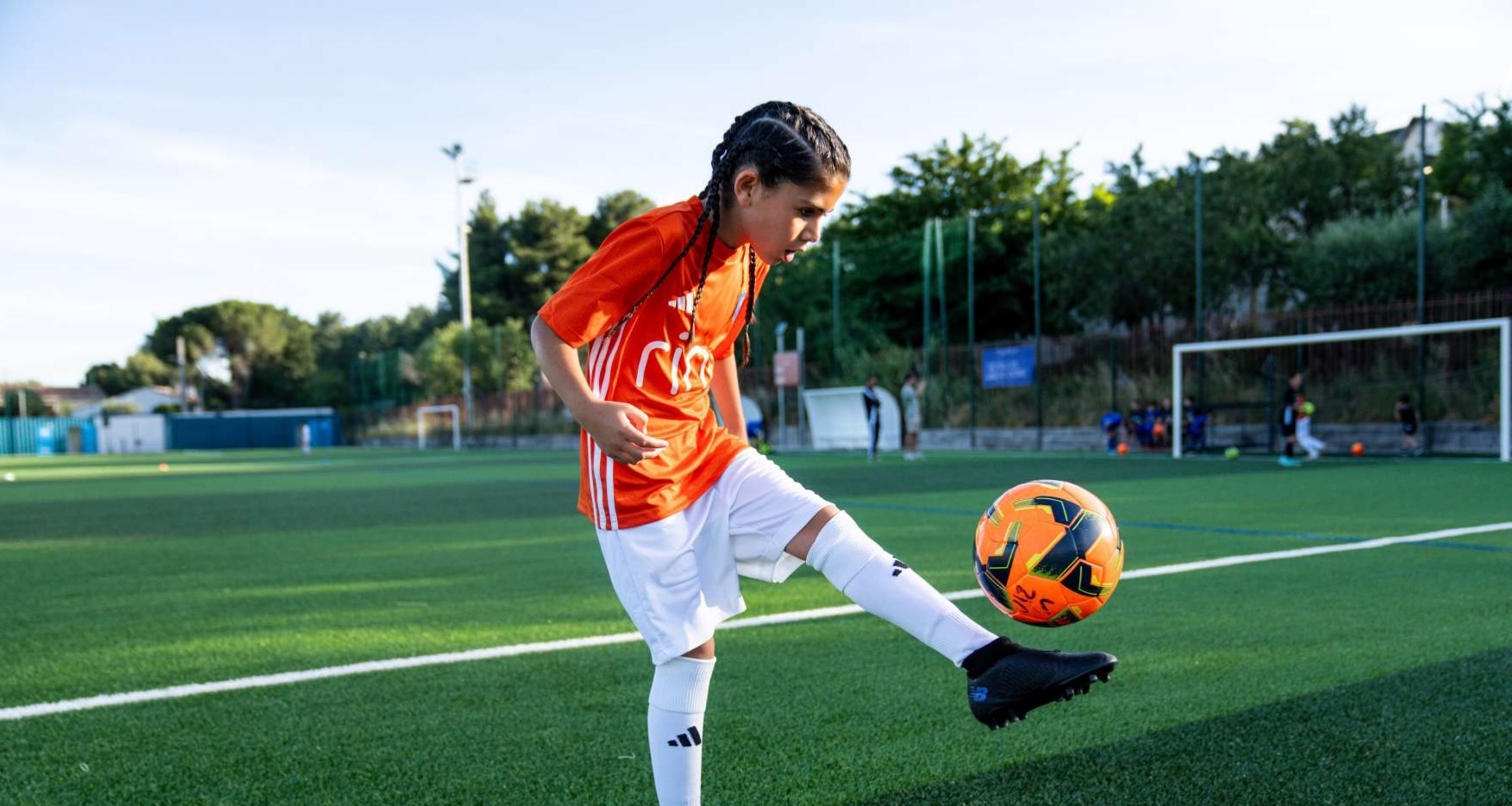
A fleeting two-second appearance in the background of a televised game represents a one-time point of contact, limited in time and dependent on the pace of the media. In contrast, a jersey worn for three years by a young player is a lasting presence: it is seen, worn, and repeated throughout training sessions, games, and trips, as well as in the daily lives of those around him.
In line with this approach, act for sport does not compare levels of impact but rather a program’s ability to increase the number of touchpoints over time. Media and digital channels generate rapid but sporadic exposure, whereas amateur sports allow for a recurring presence that is integrated into local lifestyles. With an equivalent budget, this translates to a higher number of contacts that are, above all, more deeply rooted in the daily lives and consumption patterns of the target audiences, particularly around the network’s points of sale.
Summary
For the same investment, every euro spent on amateur sports generates 1.8 times more qualified leads, while ensuring the brand’s visibility and recall over a 3-year period among 56,000 players.
Ready to get the most out of your marketing investments? Schedule a meeting with Sissi and learn about the “act for sport” initiative.
What is the cost difference between professional and amateur sponsorship?
A logo on the front of a top-tier Ligue 1 jersey costs tens of millions of euros. With €2 million, you can only afford a mid-table professional club (and even that’s a stretch). Conversely, that same budget in amateur sports allows you to outfit and sponsor a massive network of 2,000 clubs throughout France.
How is the qualified CPM calculated for Ligue 1 versus amateur sports?
The qualified CPM incorporates an impact coefficient based on actual attention. While professional sports score high on immediate brand awareness through TV, amateur sports make up for this through brand recall, the regularity of weekend practices, and the appreciation of the local community. This makes the impact of local engagement much more cost-effective.
Is amateur sports sponsorship a good fit for a retail chain?
It’s the chain’s main business advantage. While a professional club focuses attention on a single region, the amateur model precisely segments clubs by catchment area. Your retail locations benefit from exclusive targeting and dedicated promotional events to attract customers to the store.
Buying visibility in professional sports means meeting the standards of a very expensive market. For example, Boulanger invests approximately 2.5 M€ to appear on the front of LOSC’s jersey, CMA CGM between 8 and 9 M€ for OM, Emirates between 20 and 25 M€ for OL, and Qatar Airways between 60 and 70 M€ for PSG. In this context, a budget of €2 million makes it virtually impossible to secure sponsorship with the most high-profile clubs in Ligue 1.
On the other hand, this budget generally allows for main sponsorship of mid-table or lower-table clubs, or secondary partnerships with more high-profile teams. The resulting exposure remains concentrated in a single geographic area or metropolitan region, with limited coverage of the rest of the country, particularly outside priority catchment areas.
This approach has several limitations. The visibility gained depends largely on the sports calendar and the associated media audiences. Furthermore, the legal framework imposed by professional leagues limits brands’ ability to activate partnerships under strict constraints. For a brand, turning this television exposure into an effective drive-to-store initiative is a challenge, given the inability to manage the point of contact independently.
This issue is also addressed in the CPM analysis. The audience generated by a professional sports club can be substantial but remains widely dispersed. A significant portion of these contacts is located outside the advertiser’s catchment areas. While this visibility helps build brand awareness, it is less effective in meeting objectives related to local coverage, commercial activation, or precise geographic targeting.
Given the budget constraints and limitations of professional sports partnerships, the approach developed by our agency is based on a regional network strategy. With a budget of 2 M€, a brand can engage up to 2,000 amateur clubs spread across the entire country. Each club is selected based on its proximity to a catchment area or a retail location within the network. The investment is thus focused on regions where the brand wishes to boost its visibility and drive local foot traffic, rather than on a broad, poorly targeted national audience.
In this model, visibility moves beyond screens to take center stage in everyday life. Each amateur club becomes a high-performing advertising ecosystem that generates more than 100 recurring touchpoints per club. Players, families, volunteers, and opposing teams encounter the brand every week—and in some cases, every day—during practices and games. By leveraging the clubs’ application platforms—mechanisms approved by major clients such as Uber Eats, Volvic, and Caisse d’Épargne—advertisers establish a long-term presence, benefit from continuous attention, and enjoy a strong recall bias.
Furthermore, the impact of the campaign can be directly measured by its ability to drive in-store sales. Unlike professional sports, on-the-ground activation is not constrained by strict regulations. Partner brands distribute equipment to clubs, create direct links with their local retail locations, and collect high-quality data at the source. By combining an equipment donation campaign with absolute territorial exclusivity within each catchment area, mass sponsorship becomes a direct and highly localized tool for customer acquisition.
To put this performance into perspective, let’s consider two identical investments of 2 million euros.
On the one hand, a season of jersey sponsorship for a mid-table Ligue 1 club. On the other, the rollout of a national campaign in your name encompassing 2,000 amateur clubs over three years.
While the professional option maintains visibility on national digital and television platforms, the grassroots model takes the lead once you factor in actual on-field exposure and the cumulative impact among the players’ social circles. In terms of total gross reach, the mass-market strategy in amateur sports is 51% more effective than elite-level sponsorship with an equivalent budget.
A fleeting two-second appearance in the background of a televised game represents a one-time point of contact, limited in time and dependent on the pace of the media. In contrast, a jersey worn for three years by a young player is a lasting presence: it is seen, worn, and repeated throughout training sessions, games, and trips, as well as in the daily lives of those around him.
In line with this approach, act for sport does not compare levels of impact but rather a program’s ability to increase the number of touchpoints over time. Media and digital channels generate rapid but sporadic exposure, whereas amateur sports allow for a recurring presence that is integrated into local lifestyles. With an equivalent budget, this translates to a higher number of contacts that are, above all, more deeply rooted in the daily lives and consumption patterns of the target audiences, particularly around the network’s points of sale.
Summary
For the same investment, every euro spent on amateur sports generates 1.8 times more qualified leads, while ensuring the brand’s visibility and recall over a 3-year period among 56,000 players.
Ready to get the most out of your marketing investments? Schedule a meeting with Sissi and learn about the “act for sport” initiative.
What is the cost difference between professional and amateur sponsorship?
A logo on the front of a top-tier Ligue 1 jersey costs tens of millions of euros. With €2 million, you can only afford a mid-table professional club (and even that’s a stretch). Conversely, that same budget in amateur sports allows you to outfit and sponsor a massive network of 2,000 clubs throughout France.
How is the qualified CPM calculated for Ligue 1 versus amateur sports?
The qualified CPM incorporates an impact coefficient based on actual attention. While professional sports score high on immediate brand awareness through TV, amateur sports make up for this through brand recall, the regularity of weekend practices, and the appreciation of the local community. This makes the impact of local engagement much more cost-effective.
Is amateur sports sponsorship a good fit for a retail chain?
It’s the chain’s main business advantage. While a professional club focuses attention on a single region, the amateur model precisely segments clubs by catchment area. Your retail locations benefit from exclusive targeting and dedicated promotional events to attract customers to the store.