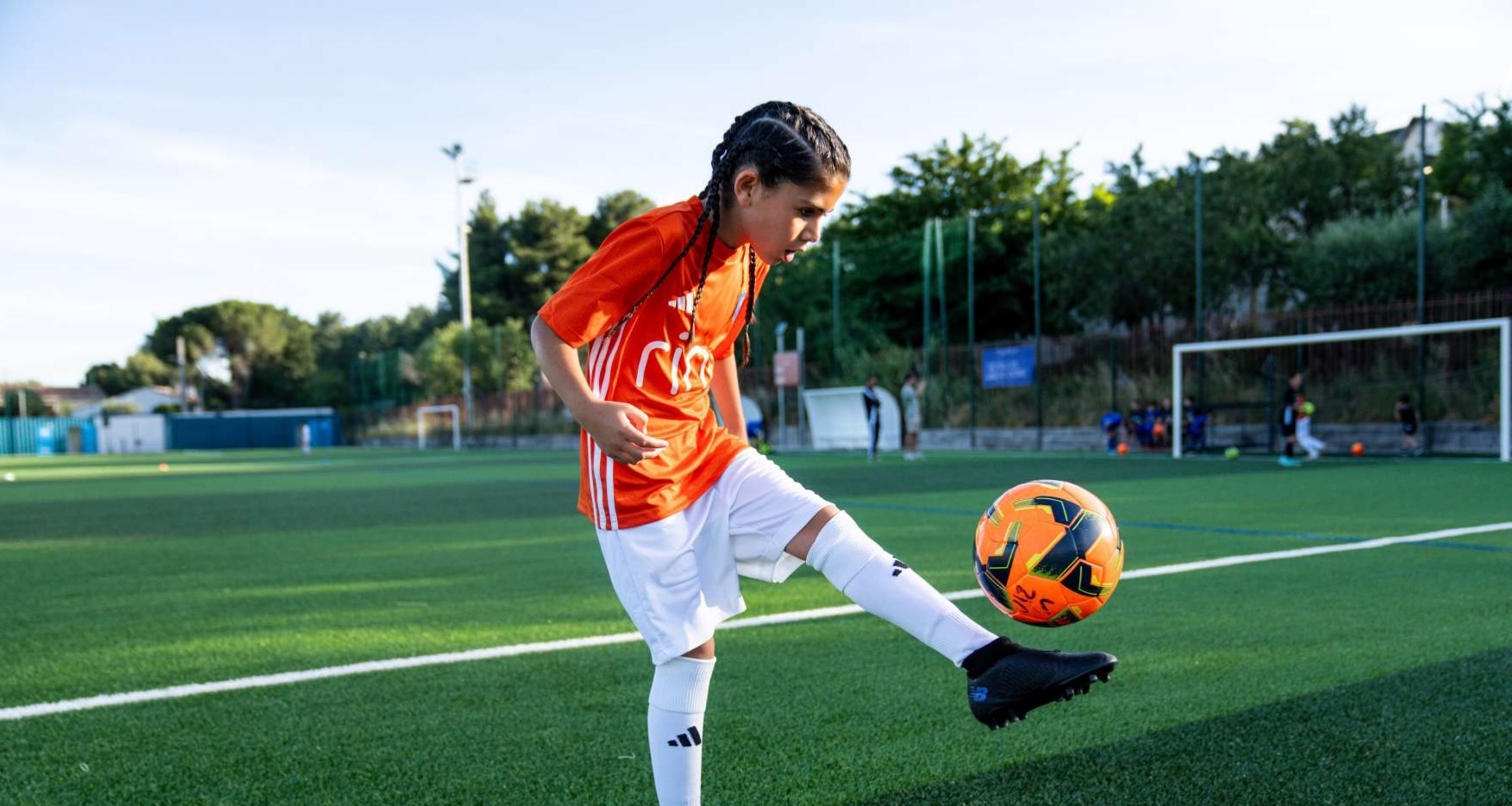
Professional sports bring fame, while amateur sports bring legitimacy. To put an end to CSR-washing, brands need to focus on the “last mile”: the local club. Discover how act for sport makes impact tangible, appealing, and undeniable.
CSR all too often suffers from a persistent problem: intangibility. We talk about “pathways,” “neutrality,” or “values.” Amateur sports, on the other hand, are by definition physical. It is the arena where a company’s logo leaves the PowerPoint slide to become tangible equipment in the hands of a volunteer or on the shoulders of a child.
Funding a poster campaign on inclusion is one thing. Funding the full equipment for a para-soccer team or enabling the launch of a women’s team at a rural club is quite another. Here, the brand’s commitment carries real weight: it makes participation possible. The brand doesn’t just “talk” about diversity; it makes it possible both technically and financially.
Sports clubs are often the only places where people from all walks of life still come together. They serve as spaces for informal education, sometimes academic support, and lifelong learning for the 3 million volunteers in France. A company that supports this social fabric isn’t investing in “sports”; it’s investing in the resilience of the community. It becomes an active participant in the community.
Let’s be blunt: there’s no place here for contempt toward “business.” A company needs to perform well to survive.act for sport ’s strength lies in demonstrating that social impact isn’t the enemy of return on investment (ROI)—it’s its new driving force.
Traditional advertising bombardment overwhelms our minds. In contrast, a family’s emotional attachment to the sponsor that helped the local club upgrade its facilities is unwavering. We move beyond mere recall to a sense of gratitude. This brand loyalty is far more enduring than a simple click on a web banner.
The primary audience for a CSR initiative is the company’s employees. Seeing their company take concrete action at the sports club where their own child or a neighbor’s child plays fosters a powerful sense of pride and belonging. It demonstrates consistency between what the company tells its employees and what it actually does “in the real world.”
This is often where big brands run into trouble: how do you manage 500 or 1,000 local partnerships without burning out? How do you ensure that the money invested actually reaches the franchisees?
At act for sport, we have developed tools to provide a concrete solution to this need for transparency. We don’t just claim that action has been taken—we prove it. We provide delivery receipts, photos of equipment handovers, and precise data. This traceability is the only effective weapon against “greenwashing.”
Investing in amateur sports is no longer a "wasted" marketing expense. Thanks to our methodology, we transform these on-the-ground initiatives into actionable data for companies’ Non-Financial Performance Statements (NFPS). Sponsorship becomes a robust, auditable, and valuable indicator of non-financial performance.
At the Sport Définition conference, Guillaume Sarfati, CEO of act for sport, highlighted a fundamental truth that many marketers overlook amid their digital KPIs.
“I’m sure you remember the sponsor that was on your first jersey.”
This phrase is more than just a Proustian madeleine. It highlights the power of memory and emotion in amateur sports. This is where the original bond between a brand and its audience is forged.
Beyond corporate values, what matters is taking action. Guillaume explains in detail how brands like Volvic are implementing concrete initiatives. The goal isn’t to pull off a publicity stunt, but to address real logistical and human needs within the clubs.
The message is clear: for CSR to be effective, it must be concrete and beyond reproach (9’08). That is why act for sport goes so far as to provide delivery receipts for the equipment. When the advertiser can prove that it has delivered, doubt gives way to trust.
A brand's job is to sell; our job, as an agency, is to provide it with impactful communication that doesn't compromise visibility. Making impact "sexy" means making it appealing to companies so that they commit to it in a big way.
Investing in amateur sports means shaping the society of tomorrow while strengthening your market position today. This is not a contradiction; it is a long-term vision. The marketing of tomorrow will be based on genuine commitment—or it will not exist at all.
Book an appointment with Sissi and learn about the "Act for Sport" initiative.
CSR all too often suffers from a persistent problem: intangibility. We talk about “pathways,” “neutrality,” or “values.” Amateur sports, on the other hand, are by definition physical. It is the arena where a company’s logo leaves the PowerPoint slide to become tangible equipment in the hands of a volunteer or on the shoulders of a child.
Funding a poster campaign on inclusion is one thing. Funding the full equipment for a para-soccer team or enabling the launch of a women’s team at a rural club is quite another. Here, the brand’s commitment carries real weight: it makes participation possible. The brand doesn’t just “talk” about diversity; it makes it possible both technically and financially.
Sports clubs are often the only places where people from all walks of life still come together. They serve as spaces for informal education, sometimes academic support, and lifelong learning for the 3 million volunteers in France. A company that supports this social fabric isn’t investing in “sports”; it’s investing in the resilience of the community. It becomes an active participant in the community.
Let’s be blunt: there’s no place here for contempt toward “business.” A company needs to perform well to survive.act for sport ’s strength lies in demonstrating that social impact isn’t the enemy of return on investment (ROI)—it’s its new driving force.
Traditional advertising bombardment overwhelms our minds. In contrast, a family’s emotional attachment to the sponsor that helped the local club upgrade its facilities is unwavering. We move beyond mere recall to a sense of gratitude. This brand loyalty is far more enduring than a simple click on a web banner.
The primary audience for a CSR initiative is the company’s employees. Seeing their company take concrete action at the sports club where their own child or a neighbor’s child plays fosters a powerful sense of pride and belonging. It demonstrates consistency between what the company tells its employees and what it actually does “in the real world.”
This is often where big brands run into trouble: how do you manage 500 or 1,000 local partnerships without burning out? How do you ensure that the money invested actually reaches the franchisees?
At act for sport, we have developed tools to provide a concrete solution to this need for transparency. We don’t just claim that action has been taken—we prove it. We provide delivery receipts, photos of equipment handovers, and precise data. This traceability is the only effective weapon against “greenwashing.”
Investing in amateur sports is no longer a "wasted" marketing expense. Thanks to our methodology, we transform these on-the-ground initiatives into actionable data for companies’ Non-Financial Performance Statements (NFPS). Sponsorship becomes a robust, auditable, and valuable indicator of non-financial performance.
At the Sport Définition conference, Guillaume Sarfati, CEO of act for sport, highlighted a fundamental truth that many marketers overlook amid their digital KPIs.
“I’m sure you remember the sponsor that was on your first jersey.”
This phrase is more than just a Proustian madeleine. It highlights the power of memory and emotion in amateur sports. This is where the original bond between a brand and its audience is forged.
Beyond corporate values, what matters is taking action. Guillaume explains in detail how brands like Volvic are implementing concrete initiatives. The goal isn’t to pull off a publicity stunt, but to address real logistical and human needs within the clubs.
The message is clear: for CSR to be effective, it must be concrete and beyond reproach (9’08). That is why act for sport goes so far as to provide delivery receipts for the equipment. When the advertiser can prove that it has delivered, doubt gives way to trust.
A brand's job is to sell; our job, as an agency, is to provide it with impactful communication that doesn't compromise visibility. Making impact "sexy" means making it appealing to companies so that they commit to it in a big way.
Investing in amateur sports means shaping the society of tomorrow while strengthening your market position today. This is not a contradiction; it is a long-term vision. The marketing of tomorrow will be based on genuine commitment—or it will not exist at all.
Book an appointment with Sissi and learn about the "Act for Sport" initiative.