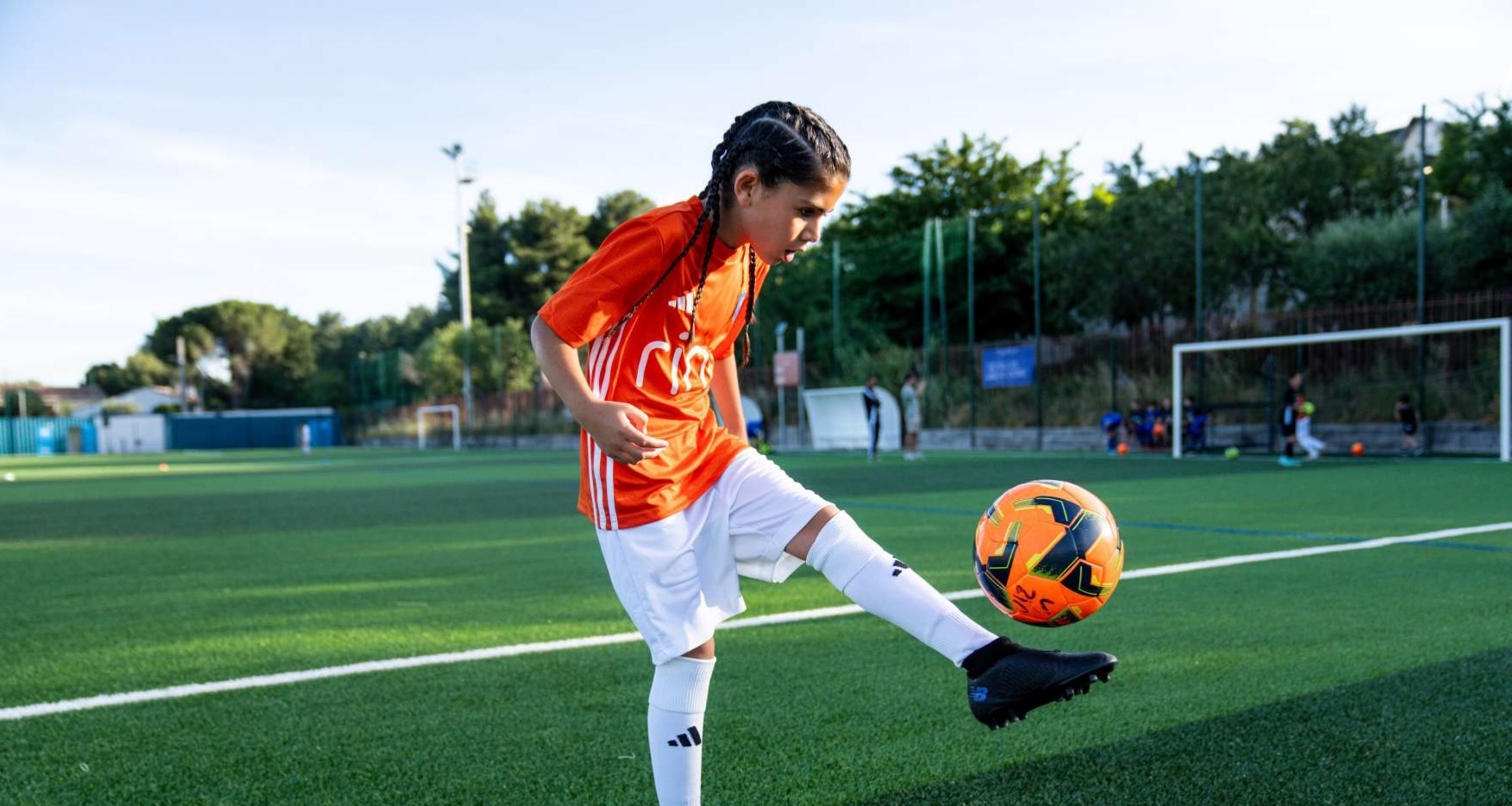
In 2026, women's sports are an under-exploited business opportunity. With an engaged audience and record ROI, this is a sponsorship opportunity not to be missed. Discover how to move from CSR to performance with the method and successes of act for sport.
In a saturated media landscape, where capturing attention has become a luxury, women's sports offer a cost/engagement ratio that cannot be found elsewhere. This is not a "miracle solution," but rather a cold analysis of market data.
Studies consistently show that female sports fans are statistically more attentive and loyal to partner brands than their male counterparts. Why? Because the connection between athletes and their audience is often more direct and less "filtered." This closeness creates superior brand recall.
The audience for women's sports is not passive. It is a community that is aware of being part of an upward trend. When a brand supports this progress, it is not seen as just a logo on a jersey, but as a driving force behind this evolution. This is what we call "transactional goodwill": fans repay you with attention for what you give them in resources.
Investing in men's professional sports often means accepting that your logo will be competing against 50 other brands on an LED billboard. Women's sports remain a less saturated space. Your brand gains immediate visibility. You're not just part of the backdrop: you become a key player in the project.
In this blue ocean, advertising saturation is virtually non-existent. This allows for longer speeches, more creative formats, and a presence that "breathes." For an SME or mid-sized company, this ensures that they will not be drowned out by the firepower of the traditional advertisers in men's sports.
As I recently said about advertising, "free-from" marketing (free from AI, free from sugar, free from gluten) exhausts me. Women's sports are all about "with" marketing.
This is not a matter of posturing, but rather an immediate association with values of renewal. It is a major differentiating factor.
To understand the impact, you have to look at the concrete results. Customer sponsorship is no longer an exception; it is a method that has proven itself at all levels.
Take Orange's "WoMen's football" campaign. By using special effects to show that spectacular moves traditionally associated with male players were actually performed by female players, the brand pulled off a viral coup.
But beyond the buzz, brand preference skyrocketed. Why? Because Orange used women's sports to send a universal message about skill and emotion. By being where no one expected it to be, the sponsor captured an audience that felt neglected by traditional sports marketing, generating much higher aided recall rates than a conventional sponsorship campaign.
It is often thought that female sponsorship is reserved for CAC 40 giants. This is not true. Look at how a player like Uber Eats, a pure digital player, has become a springboard for promoting the graphic identities of local clubs.
By relying on simple but highly visible mechanisms, a brand can transform a local women's section into a true standard-bearer for its community. The challenge here is not to impose a national strategy, but to give a club the means to assert itself visually and athletically.
Results observed for these types of campaigns:
If professional sports are the showcase, amateur sports are the foundation. This is where true brand loyalty is forged and where the social impact is most tangible.
Supporting your city's women's team creates a much stronger emotional bond than yet another billboard around a men's stadium. In amateur sports, the sponsor is not seen as a cold advertiser, but as a lifelong partner.
One that allows them to buy kits, finance travel by van to matches on the other side of the region, or professionalize the coaching of young girls. This "helping hand" is seen as an investment in the future of the community. For a brand, it is an opportunity to become part of families' everyday lives.
Sponsoring women's sports is a powerful internal management tool. It boosts the pride of female employees who see their company supporting values of equality. For potential recruits (Gen Z and Millennials), consistency between the commitments posted on LinkedIn and actions on the ground is a key criterion. Supporting local women's sports sends a strong message: "We invest in potential, regardless of gender."
Our mission is to facilitate this connection between the corporate world and the world of clubs. We are not visibility sellers, but partnership architects.
We give companies access to thousands of women's sections that are just waiting for a partner to take them to the next level. Our method combines technology (for management), activation strategy (for impact), and human relationships (for sustainability). We ensure that every euro invested has a real impact, avoiding waste and maximizing visibility for the company.
Investing is one step, activating is another. Don't fall into the trap of "copy and paste." Women's sports are not a "reduced" version of men's sports; they are a different product with their own codes.
The female sports audience loves storytelling. They want to know what goes on behind the scenes: how do these players balance their professional lives with high-level sports? How committed is the staff? "Inside" content (locker room videos, player profiles, street interviews) works extremely well. It's fertile ground for authentic brand content.
Female athletes, even at the amateur or semi-pro level, often have more engaged and responsive communities. They respond to comments, they share, they are accessible. Co-create content with them rather than simply asking them to wear your logo.
Sponsorship is not a gamble, it is an investment. At act for sport, we use tracking tools to prove that the investment generates value:
The "we'll see later" marketing strategy is the most expensive of all. By waiting until the market is completely saturated, you run the risk of paying three times as much for your entry ticket in two years' time.
The pioneers of women's sponsorship are now reaping rewards that are disproportionate to their initial investment. They have understood that women's sport is not only a cause worth defending, but also a market worth conquering. At act for sport, we don't preach. We support growth and maturity. We structure projects to ensure they are viable, we professionalize them to ensure they are credible, and we help brands perform without ever losing sight of the importance of grassroots action.
🚀 Want to make your mark on your brand’s history and explore new avenues for growth? Find out how to become a sponsor with act for sport
--
See also: Sponsorship and Women's Sports: A Story Yet to Be Written
In a saturated media landscape, where capturing attention has become a luxury, women's sports offer a cost/engagement ratio that cannot be found elsewhere. This is not a "miracle solution," but rather a cold analysis of market data.
Studies consistently show that female sports fans are statistically more attentive and loyal to partner brands than their male counterparts. Why? Because the connection between athletes and their audience is often more direct and less "filtered." This closeness creates superior brand recall.
The audience for women's sports is not passive. It is a community that is aware of being part of an upward trend. When a brand supports this progress, it is not seen as just a logo on a jersey, but as a driving force behind this evolution. This is what we call "transactional goodwill": fans repay you with attention for what you give them in resources.
Investing in men's professional sports often means accepting that your logo will be competing against 50 other brands on an LED billboard. Women's sports remain a less saturated space. Your brand gains immediate visibility. You're not just part of the backdrop: you become a key player in the project.
In this blue ocean, advertising saturation is virtually non-existent. This allows for longer speeches, more creative formats, and a presence that "breathes." For an SME or mid-sized company, this ensures that they will not be drowned out by the firepower of the traditional advertisers in men's sports.
As I recently said about advertising, "free-from" marketing (free from AI, free from sugar, free from gluten) exhausts me. Women's sports are all about "with" marketing.
This is not a matter of posturing, but rather an immediate association with values of renewal. It is a major differentiating factor.
To understand the impact, you have to look at the concrete results. Customer sponsorship is no longer an exception; it is a method that has proven itself at all levels.
Take Orange's "WoMen's football" campaign. By using special effects to show that spectacular moves traditionally associated with male players were actually performed by female players, the brand pulled off a viral coup.
But beyond the buzz, brand preference skyrocketed. Why? Because Orange used women's sports to send a universal message about skill and emotion. By being where no one expected it to be, the sponsor captured an audience that felt neglected by traditional sports marketing, generating much higher aided recall rates than a conventional sponsorship campaign.
It is often thought that female sponsorship is reserved for CAC 40 giants. This is not true. Look at how a player like Uber Eats, a pure digital player, has become a springboard for promoting the graphic identities of local clubs.
By relying on simple but highly visible mechanisms, a brand can transform a local women's section into a true standard-bearer for its community. The challenge here is not to impose a national strategy, but to give a club the means to assert itself visually and athletically.
Results observed for these types of campaigns:
If professional sports are the showcase, amateur sports are the foundation. This is where true brand loyalty is forged and where the social impact is most tangible.
Supporting your city's women's team creates a much stronger emotional bond than yet another billboard around a men's stadium. In amateur sports, the sponsor is not seen as a cold advertiser, but as a lifelong partner.
One that allows them to buy kits, finance travel by van to matches on the other side of the region, or professionalize the coaching of young girls. This "helping hand" is seen as an investment in the future of the community. For a brand, it is an opportunity to become part of families' everyday lives.
Sponsoring women's sports is a powerful internal management tool. It boosts the pride of female employees who see their company supporting values of equality. For potential recruits (Gen Z and Millennials), consistency between the commitments posted on LinkedIn and actions on the ground is a key criterion. Supporting local women's sports sends a strong message: "We invest in potential, regardless of gender."
Our mission is to facilitate this connection between the corporate world and the world of clubs. We are not visibility sellers, but partnership architects.
We give companies access to thousands of women's sections that are just waiting for a partner to take them to the next level. Our method combines technology (for management), activation strategy (for impact), and human relationships (for sustainability). We ensure that every euro invested has a real impact, avoiding waste and maximizing visibility for the company.
Investing is one step, activating is another. Don't fall into the trap of "copy and paste." Women's sports are not a "reduced" version of men's sports; they are a different product with their own codes.
The female sports audience loves storytelling. They want to know what goes on behind the scenes: how do these players balance their professional lives with high-level sports? How committed is the staff? "Inside" content (locker room videos, player profiles, street interviews) works extremely well. It's fertile ground for authentic brand content.
Female athletes, even at the amateur or semi-pro level, often have more engaged and responsive communities. They respond to comments, they share, they are accessible. Co-create content with them rather than simply asking them to wear your logo.
Sponsorship is not a gamble, it is an investment. At act for sport, we use tracking tools to prove that the investment generates value:
The "we'll see later" marketing strategy is the most expensive of all. By waiting until the market is completely saturated, you run the risk of paying three times as much for your entry ticket in two years' time.
The pioneers of women's sponsorship are now reaping rewards that are disproportionate to their initial investment. They have understood that women's sport is not only a cause worth defending, but also a market worth conquering. At act for sport, we don't preach. We support growth and maturity. We structure projects to ensure they are viable, we professionalize them to ensure they are credible, and we help brands perform without ever losing sight of the importance of grassroots action.
🚀 Want to make your mark on your brand’s history and explore new avenues for growth? Find out how to become a sponsor with act for sport
--
See also: Sponsorship and Women's Sports: A Story Yet to Be Written